

If your home always seems dusty no matter how often you clean, the living room is usually the main reason. In fact, understanding why living rooms collect dust is important because this area combines heavy foot traffic, upholstered furniture, carpets, electronics, and multiple surfaces that continuously trap and recirculate dust particles. Once you understand the causes, reducing dust buildup becomes much easier and more effective.
It Has More Surfaces Than Any Other Room
Think about your living room compared to, say, your bedroom or bathroom. The average Christchurch living room contains:
- A sofa and armchairs (large, textured, upholstered surfaces)
- A coffee table and side tables
- A TV unit with electronics
- Bookshelves or display shelving
- Curtains or blinds
- Rugs or carpet
- Cushions, throws, and decorative items
- Potentially a fireplace or heat pump unit
That’s a staggering amount of total surface area compared to a bedroom (bed, wardrobe, bedside table) or bathroom (hard non-porous surfaces that wipe clean in seconds).
More surface area means more places for dust to settle. And the irregular, textured, and soft surfaces in a living room are far more effective at trapping particles than the smooth hard surfaces in a kitchen or bathroom.
Why Living Rooms Collect Dust Around Sofas and Upholstery?
Your sofa deserves special attention here, because it’s not just a surface that collects dust — it’s an active source.
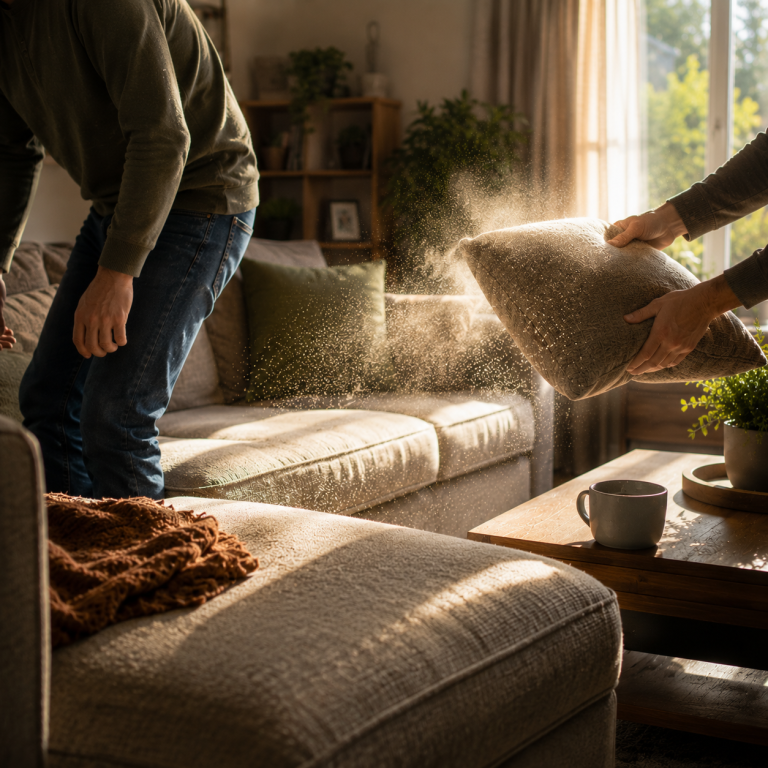
Every time someone sits down, stands up, or shifts their weight, the sofa releases a small cloud of fibres, dead skin cells, and previously trapped dust into the air. With a household of people sitting on the sofa for hours each day, this adds up to a substantial continuous release.
The same applies to armchairs, footstools, and any cushions placed on the sofa. If you pick up a sofa cushion and pat it, what you see floating in a sunbeam is a snapshot of what’s happening at lower intensity every time someone uses that seat.
Regular upholstery vacuuming — not just floor vacuuming — is the only way to manage this source directly.

Why Living Rooms Collect Dust Faster Due to Daily Foot Traffic?
The living room is the most-used room in the house. People walk through it constantly, and every footstep disturbs settled dust from the floor and carpet, launching particles back into the air.
In rooms with low traffic — a spare bedroom, a formal dining room — dust settles and stays settled. In the living room, it never really gets a chance to settle permanently because activity levels keep redistributing it.
This is why the living room can look dusty even a day or two after a thorough clean, while a guest bedroom with no traffic stays visibly clean for weeks.
Electronics Create Miniature Dust Circulation
The TV, gaming consoles, and any other electronics in your living room draw in air to cool their internal components. In doing so, they pull in fine dust particles, which accumulate inside the device and around it. The exhaust air from these devices blows particles back out into the immediate area.
This creates a localised dust circulation system around your entertainment unit. If your TV stand always seems to need dusting regardless of how recently you cleaned it, this is why.
The solution: keep electronics slightly elevated to allow better airflow, vacuum vents and backs of devices every couple of months, and avoid placing electronics directly against walls where dust can accumulate in dead air pockets. This creates a localised dust circulation system around your entertainment unit. Many homeowners overlook electronics as one of the hidden sources of dust inside modern homes.
Carpets and Rugs in Living Rooms Are Under Constant Stress
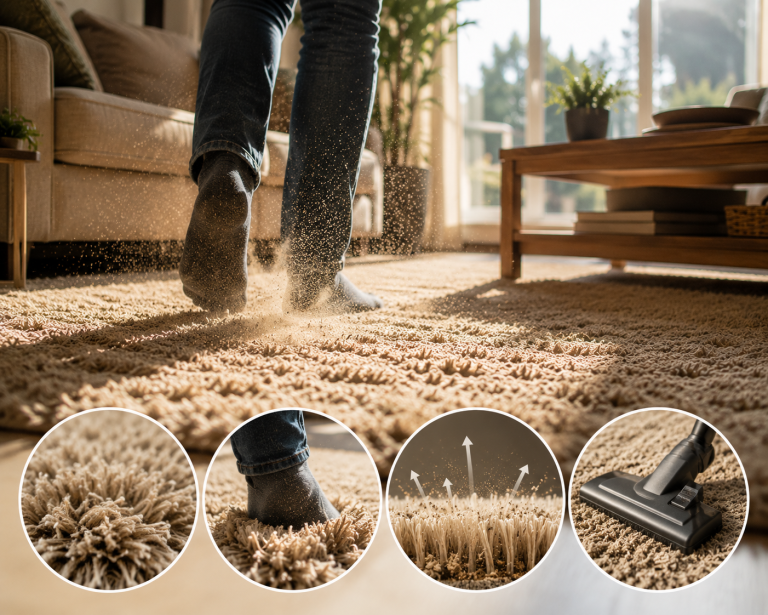
Most living room carpets and rugs take more foot traffic than any other flooring in the house. Every step compresses the fibres, drives dust deeper into the pile, and on the release, allows some of that material to re-enter the air.
Additionally, area rugs — particularly those with longer pile — act almost like a living surface, constantly working particles upward through normal movement and traffic. The dust you see on your coffee table is often partly originating from the rug beneath it.
Professional carpet cleaning in Christchurch living rooms, done every 6–12 months, extracts the deeply embedded material that regular vacuuming pushes further down rather than removing. If you’d like to understand more about how carpets contribute to your home’s overall dust levels, our guide on carpets and upholstery covers this in detail.
Curtains and Blinds at the Window Interface
Curtains in a living room are typically large, rarely washed, and positioned exactly where outdoor and indoor air meet — at the windows. They catch particles coming in from outside and release them back into the room with every breeze or every time they’re opened and closed.
Blinds have a different profile: the horizontal surfaces of slatted blinds are excellent dust collectors, and because they’re at eye height and away from the main sightlines, most people don’t notice the accumulation until it’s substantial.
Washing curtains every 2–3 months and wiping down blinds fortnightly are specific habits that make a visible difference in living room dust levels.
The Fireplace Factor (Relevant for Many Christchurch Homes)
Many Christchurch homes — particularly in older inner-city suburbs and hillside properties — have fireplaces, whether working log burners or decorative. A working fireplace introduces ash particles into the room even when not in active use, through the natural movement of air up and down the flue.
A closed fireplace damper when not in use helps. But if your home has an open-flued fireplace, there will always be some particle movement into the room. Regular cleaning of the hearth area, including vacuuming the surrounding carpet or rugs, is essential.
How to Reduce Dust in Your Living Room Specifically?
Knowing the causes makes the solutions obvious:
- Vacuum upholstery weekly. Not just floors — the sofa, armchairs, and cushions themselves.
- Clean electronics regularly. Vacuum vents with a soft brush attachment every couple of months.
- Wash or vacuum curtains every 2–3 months. Wipe blinds fortnightly.
- Use a damp microfibre cloth on hard surfaces rather than a dry duster.
- Address the carpet with regular vacuuming (twice weekly in busy living rooms) and periodic professional extraction.
- Reduce decorative clutter. Fewer objects means less surface area for dust to occupy.
When Your Living Room Needs More Than Maintenance Cleaning?
If your living room carpet has years of accumulated material, if your sofa hasn’t been professionally cleaned, or if you’ve moved into a home where the previous occupants weren’t thorough cleaners — your starting point is a reservoir, not a clean baseline.
In those cases, our residential cleaning service and carpet cleaning can reset that baseline across Christchurch suburbs from Merivale to Halswell.
Conclusion
Your living room collects dust faster than other rooms because it has more surfaces, more traffic, more electronics, and more upholstered furniture than anywhere else in your home. Each of those factors contributes independently. Understanding the specific causes in your living room allows you to target them directly — instead of just dusting more of the same surfaces more often.
Ready to reset your living room
Get in touch with Mr. Cleaner for a professional clean tailored to Christchurch homes. We’d love to help — book a free quote with no obligation.