
You clean the coffee table. You vacuum the rug. You wipe the benches.
Yet your home still feels dusty — and that’s where the real issue lies.
The hidden sources of dust in your home are often the reason dust keeps returning. You notice a thin film on the TV stand, particles settling on windowsills, and that familiar sneeze when you move a cushion — not because you missed cleaning, but because dust is coming from places you rarely think to check.
Why Hidden Sources of Dust in Your Home Matter More Than Visible Dust?
The dust you can see is already settled. It’s the continuous sources — the places actively generating or releasing dust into your air — that keep the cycle going.
Cleaning the top of your bookshelf every fortnight doesn’t help if you’ve got a return air vent two metres away that’s pumping out dusty air every time your heat pump runs. You’re constantly fighting the output without addressing the input.
This is what most cleaning routines miss entirely.
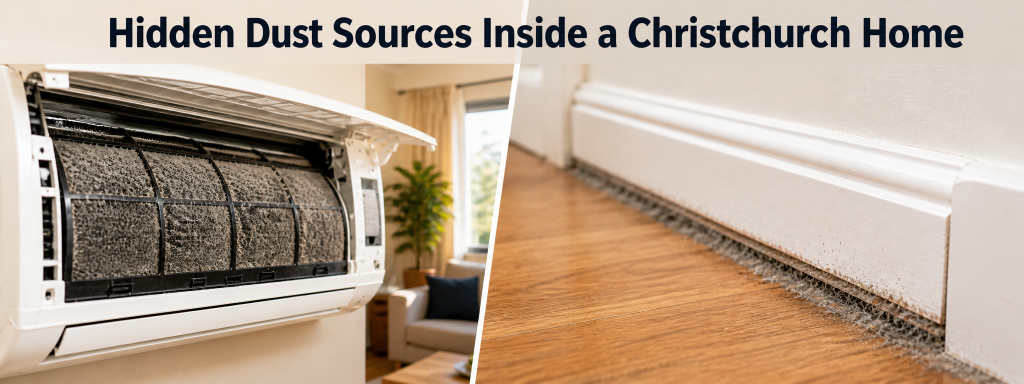
Heat Pump Filters: A Hidden Source of Dust in Your Home
Heat pumps are standard in Christchurch homes now. They’re efficient, they work well in Canterbury’s cold winters — and their filters are almost universally neglected.
A heat pump filter works by trapping airborne particles as air passes through. Over time, that filter becomes saturated. When it does, it stops trapping and starts releasing — pushing fine dust particles back into the circulating air every time the system runs.
Manufacturer guidance is typically every 2–4 weeks for a light clean (just rinse under the tap), and a proper check every 3 months. Most homeowners haven’t cleaned theirs in a year or more.
Check yours today. If it’s visibly grey or clogged, that filter has been actively dusting your home for months.
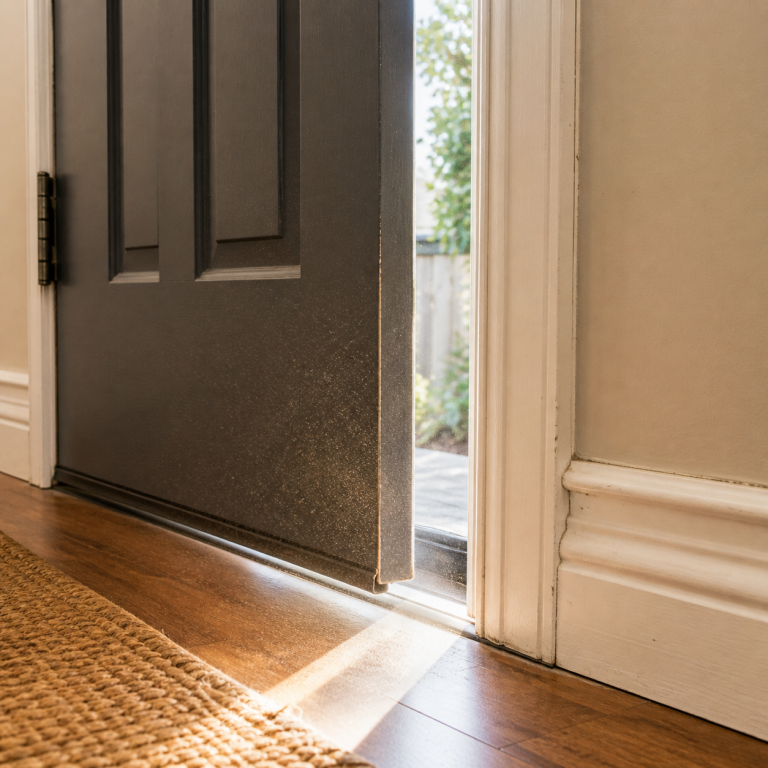
Door and Window Seals That No Longer Seal
Christchurch homes — particularly older villas, bungalows, and post-quake builds — often have door and window frames that have shifted slightly over the years. Gaps as small as 2–3mm around a door frame allow constant airflow from outside.
In Canterbury, that outside air carries fine soil dust, pollen from the plains, and in urban areas, particulates from roads and construction. Small gaps mean a steady trickle of outdoor particles into your home every single day.
Check your external door seals by holding a lit candle or incense stick near the frame. If the flame flickers, air (and dust) is getting in. Draught excluders and door seals are an inexpensive fix that makes a meaningful difference.
Skirting Boards, Cornices, and Ceiling Edges
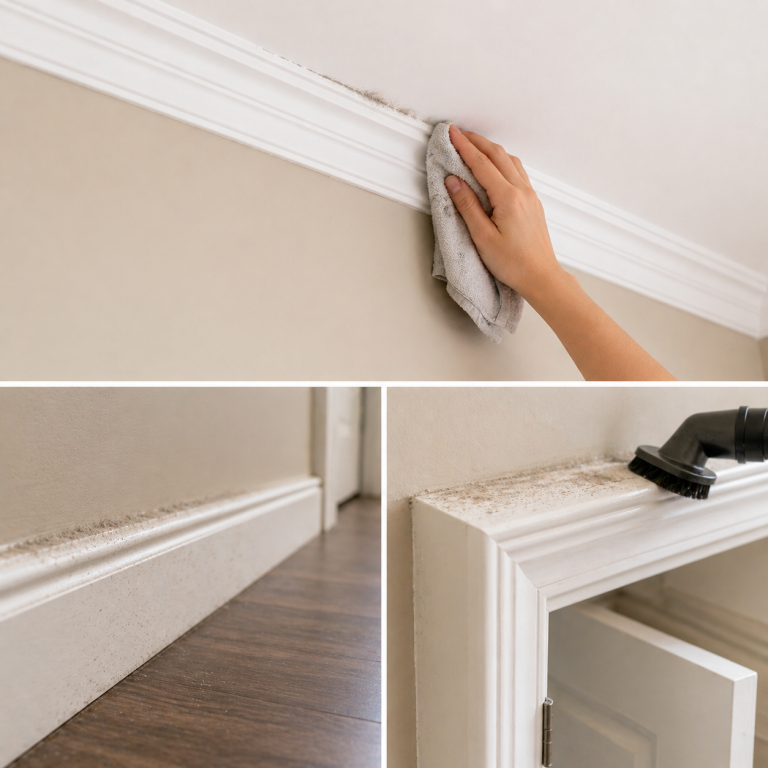
People vacuum floors and dust furniture. Almost nobody regularly cleans skirting boards, the tops of door frames, or the cornice lines where walls meet ceilings.
These surfaces accumulate a thick layer of dust over time. But more importantly, they’re also disturbed whenever anyone opens a door forcefully, or whenever heating or cooling creates air movement near the walls. That settled dust gets kicked back into circulation.
A thorough clean of these surfaces once a month — with a damp cloth or a vacuum brush attachment — removes one of the most consistent background sources of airborne dust in any home.
Mattresses: Your Most-Used Dust Source
This one surprises people, but it’s well-documented. A mattress accumulates dead skin cells, dust mite waste, and textile fibres continuously. Every night, as you move in your sleep, you’re disturbing that reservoir. Every morning when you make the bed, you’re launching another cloud into the bedroom air.
The bedroom is often the dustiest room in a house for exactly this reason — and people rarely think to treat the mattress itself.
Vacuuming your mattress with an upholstery attachment monthly and using a quality mattress protector (washed regularly) significantly reduces this source. If your mattress is over 8 years old, the accumulation can be substantial. Soft surfaces play a major role—see how carpets trap dust and contribute to ongoing dust buildup.
Electronics With Fans and Vents

Your TV, gaming console, desktop computer, and home theatre equipment all draw in air to cool themselves — and in doing so, draw in dust. That dust collects on internal components, and over time, the warm exhaust air from these devices blows fine particles back out into the room.
The area around a TV unit or entertainment console is almost always dustier than surrounding areas for this reason. It’s not the furniture — it’s the electronics generating a miniature dust circulation system.
Vacuuming the vents on electronics every couple of months with a soft brush attachment helps. Keeping electronics slightly elevated rather than pushed flat against walls also improves air circulation and reduces build-up.
Books, Decorative Items, and Stored Fabric
Open bookshelves are dust magnets — but the real issue isn’t the books themselves. It’s the fact that books and decorative objects have irregular shapes with lots of surface area, yet they’re rarely disturbed or cleaned. They become long-term dust reservoirs.
The same applies to decorative baskets, stacked magazines, displayed pottery, and anything with texture or an irregular surface. These items slowly accumulate dust without anyone noticing — until you move them and find a perfect dust shadow on the shelf beneath.
Reducing decorative clutter or grouping items in ways that make them easier to wipe down regularly is one of the simplest ways to reduce passive dust accumulation.
Ducted Heating Systems (If Your Home Has Them)
Older Christchurch homes with ducted gas or wood heating systems often have ductwork that hasn’t been cleaned in years — sometimes decades. Dust, debris, and even mould can accumulate inside ducts, and every time the heating activates, some of that material gets distributed through the home.
If you have ducted heating and you’re experiencing persistent dust despite regular cleaning, having the ducts professionally inspected is worth considering. It’s not cheap, but neither is cleaning a home that constantly re-dustifies itself.
What a Professional Clean Can Reveal?
Sometimes the best way to identify your home’s hidden dust sources is a professional clean that goes beyond your regular routine. When our team does a thorough residential clean in Christchurch homes, we regularly find skirting board build-up, neglected vent covers, and soft furnishing accumulation that the homeowner had no idea about.
It’s also worth considering carpet cleaning as part of identifying dust sources — carpets are often the single largest hidden reservoir in a home, and what comes out during a professional extraction can be genuinely surprising. Professional carpet cleaning removes deeply embedded dust particles that standard vacuuming cannot reach.
Hidden Dust Sources: Quick Checklist
- Heat pump filter (when did you last clean it?)
- Door and window seals (are they still gapless?)
- Skirting boards and cornices
- Your mattress
- Electronics with fans and vents
- Decorative clutter and open bookshelves
- Ducted heating vents (if applicable)
Work through this list systematically and you’ll find at least one or two sources you hadn’t considered. Address them, and your dust situation will noticeably improve — without needing to clean more frequently.
Conclusion
The dust you can see is not the problem. The hidden, continuous sources are. Understanding where your dust actually comes from is the first step to making your cleaning work last. If dust keeps coming back even after cleaning, read our guide on why dust keeps returning after cleaning to understand the root causes.
Not sure where to start?
Our Christchurch cleaning team can do a thorough deep clean of your home, tackling the hidden surfaces and overlooked reservoirs that regular routines miss. Get in touch for a free quote on our residential cleaning services.